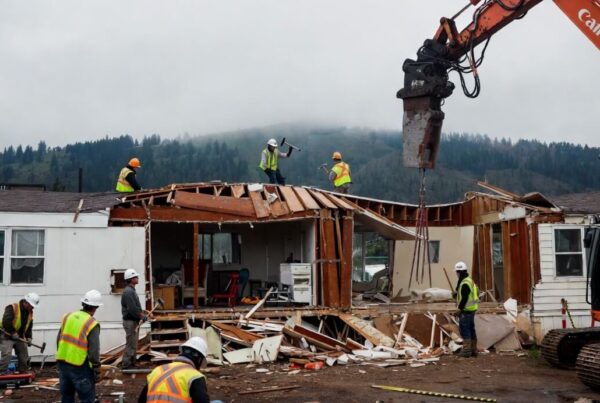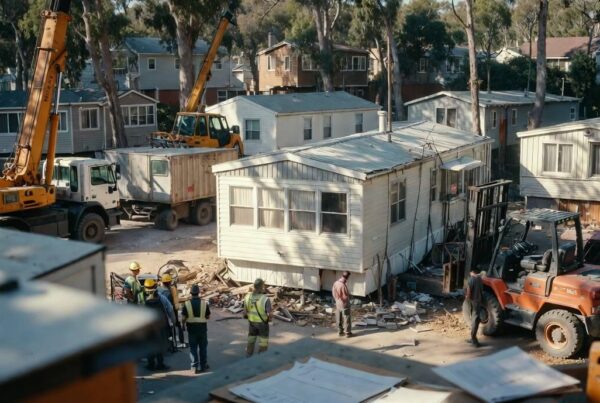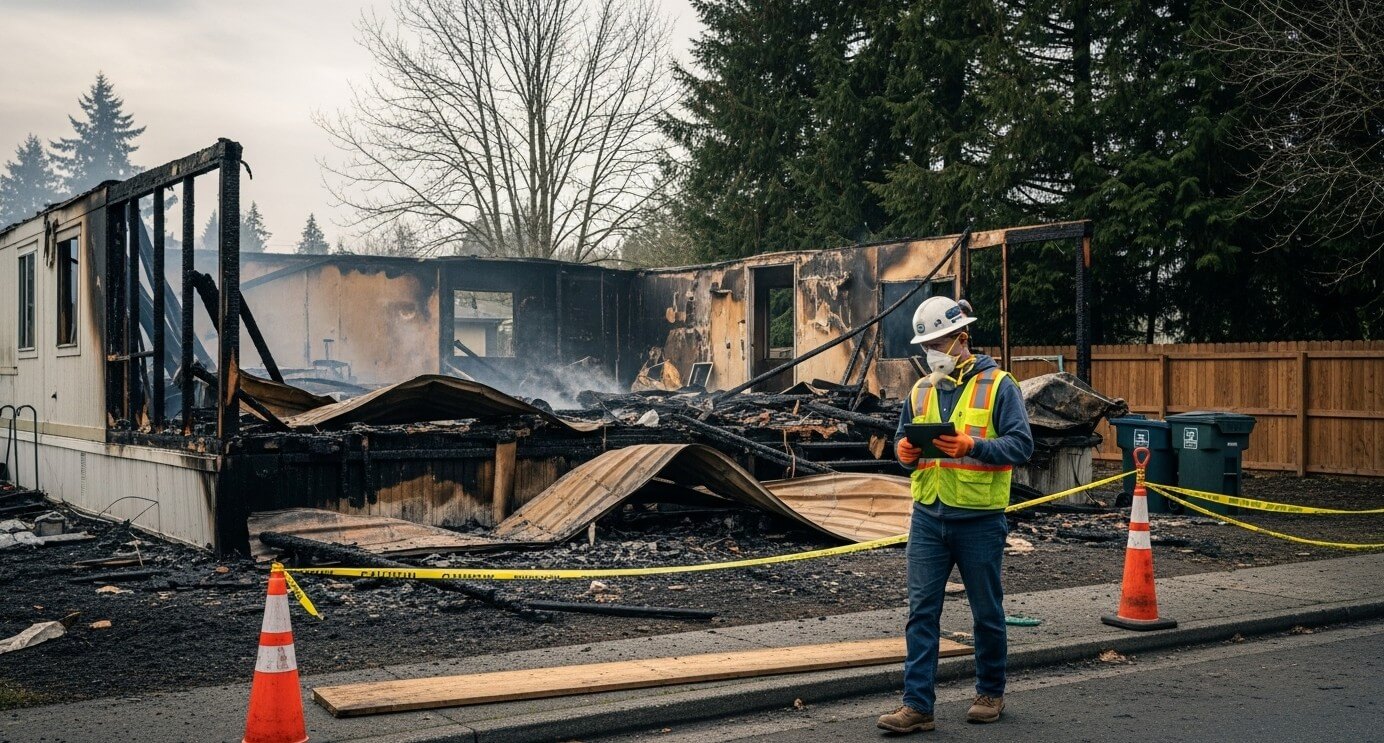
A mobile home that has been damaged by fire presents challenges that are more complicated than simply tearing the house down. Burned structures are handled differently in Washington State due to health risks, environmental issues, and disposal rules. Charred remnants, compromised framing, and dangerous debris all need to be planned for before starting any demolition.
This guide will explain why burned mobile homes need special treatment, the safety precautions for you and anyone helping with demolition, how a homeowner’s insurance may affect the cost of demolition, and how Washington oversees the disposal of burned waste.
Why Fire-Damaged Mobile Homes Require Special Handling
Following a fire, a mobile home is structurally unstable. Heat can weaken steel frames, undermine flooring supports, and lead to partial collapses that aren’t obvious from the exterior. In addition to their structural problems, fires often leave behind:
- Toxic ash and soot
- Melted plastics and insulation
- Contaminated debris
These conditions make fire-damaged demolition more complex and more tightly regulated than standard removal. Also, learn about the features, benefits, and more about triple wide mobile homes here!
Safety Protocols: Protecting Against Hazardous Dust & Nails
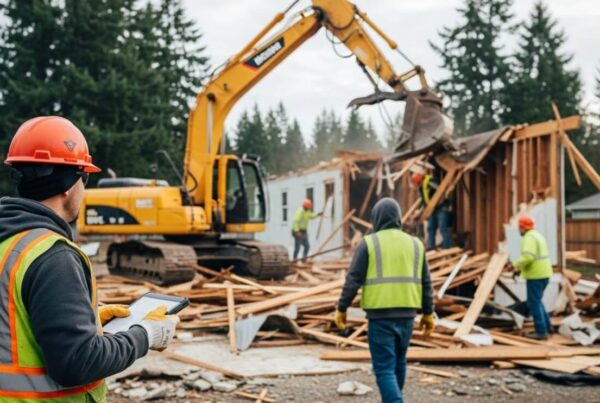
Airborne debris is one of the greatest risks associated with demolition. Burnt materials can emit airborne dust that is composed of fines and can include toxic compounds. Safety protocols typically focus on:
- Controlling dust during demolition
- Managing exposed nails, sharp metal, and unstable debris
- Using protective equipment to reduce inhalation risks
Charred wood often splinters easily, and metal components may be warped or brittle. These factors significantly increase injury risk if safety measures aren’t followed. For a broader overview, our internal resource on mobile home demolition safety requirements in Washington explains how hazardous conditions are managed.
Read more: Does manufactured home depreciate?
Does Insurance Cover the Cost of Demolition After a Fire?
In many cases, homeowners’ insurance may cover demolition costs, but coverage depends on the policy. Insurance providers often consider:
- Whether demolition is required before rebuilding
- The extent of structural damage
- Environmental cleanup requirements
Some policies include debris removal limits, while others separate demolition from cleanup coverage. Reviewing policy terms carefully is essential before assuming costs are fully covered. If you’re wondering “how much does moving a mobile home cost?” the price can vary significantly. Read more!
Environmental Disposal Rules for Burnt Debris in Washington
Washington enforces strict rules for disposing of fire-damaged materials. Burnt debris may include:
- Treated wood
- Contaminated insulation
- Metal coated with fire residue
- Household materials altered by heat
In any case, these can’t simply be thrown out with other construction waste. Authorized disposal sites, segregation of materials, and correct transport are essential to the environment. Illegally dumping or disposing of it can lead to fines and orders for mandatory clean-up after the demolition is already done. Read more: How to remove popcorn ceiling in double wide mobile home?
Final Thoughts
Tearing down a fire-damaged mobile home in Washington state is more than just a teardown. Structural unsoundness, dangerous materials, insurance issues, and environmental disposal laws all weigh in on how the demolition needs to be handled.Understanding this is important for building owners when considering fire-related demolition with realistic expectations and knowledge of the risks. When safety and adherence to regulation are met, demolition is a regulated and legal way to clear the land for use in development. For further assistance, contact Washington Free Mobile Home Removal!