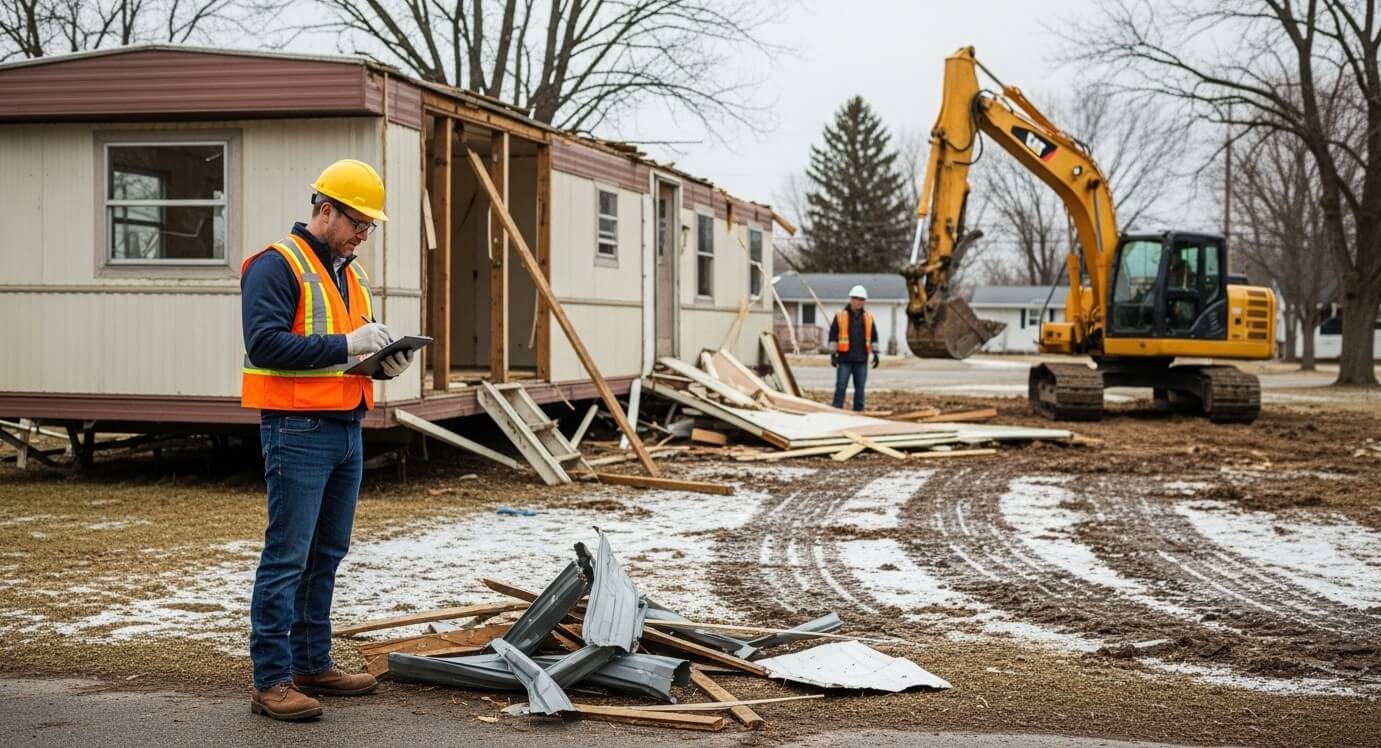
Most people who own mobile homes might think that an old unit still has cash value because of the metal inside. After all, steel and copper aren’t worthless, right? The economics of pulling out mobile homes are actually kind of misunderstood. But when you compare scrap value vs. demolition cost, and transporting cost, the numbers tell a very different story.
This guide explains the real math behind mobile home scrap value, explains why “free removal” is mostly a myth, and clarifies why owners usually still need to pay for removal.
The Myth of the “Free” Mobile Home: Why Scrap Yards Don’t Buy Them
One of the most common misconceptions is that scrap yards will buy old mobile homes outright. In practice, scrapyards do not buy entire structures. They purchase sorted, clean metal that is delivered to the facility.
A mobile home arrives as a mixed structure: wood, insulation, wiring, drywalling, flooring, roofing, and minimal recyclable steel. The scrap yards are not demolition firms and do not perform dismantling, hauling, or environmental remediation. The property owner or contractor is left holding that responsibility and cost.
Also, learn about the features, benefits, and more about triple wide mobile homes here!
Breakdown of Materials: How Much Copper & Steel Is Actually Inside?
While mobile homes do contain metal, the quantity is often overestimated.
Steel
Most of the steel is found in:
- The chassis and frame
- Axles and hitch components
This steel is heavy but low-grade, which reduces its per-ton value.
Copper
Copper exists mainly in:
- Electrical wiring
- Plumbing lines (in some older models)
But copper needs to be stripped and sorted, then cleaned before it can be sold for scrap, a labor-intensive endeavor. And when stripped, the amount you can actually sell is far less than most people would imagine.
Read more: Does manufactured home depreciate?
The Cost of Labor & Transport vs. Scrap Income
This is where the math becomes clear. Demolition and removal involve:
- Skilled labor for dismantling
- Heavy equipment
- Transportation of debris
- Disposal fees for non-metal materials
Even when scrap metal is recovered, its resale value rarely covers these expenses. Labor and transport costs alone often exceed the scrap income by a wide margin. This imbalance is why scrap value does not offset demolition costs in most cases.
If you’re wondering “how much does moving a mobile home cost?” the price can vary significantly. Read more!
Why You Have to Pay for Removal (Even if It Has Metal)
Mobile home removal isn’t just about materials; it’s about process, safety, and compliance.
Contractors must:
- Follow local disposal and environmental regulations
- Separate recyclable and non-recyclable materials
- Legally transport debris
- Prepare the site after removal
These steps protect property owners from fines, illegal dumping issues, and future liability. Paying for removal ensures the job is done correctly, not cheaply. For more details, see our internal guide on mobile home demolition and cleanup services to understand what compliant removal involves.
Read more: How to remove popcorn ceiling in double wide mobile home?
Final Thoughts
When comparing scrap value vs. demolition cost, the idea that an old mobile home is “worth money” rarely holds up. While metal exists inside the structure, the labor, transport, and legal requirements far outweigh any scrap income.Realizing this truth can assist property owners in maintaining realistic expectations and avoiding misleading claims about free removal. Dependable and reasonable demolition is an investment in safety, legality, and peace of mind; far more valuable than the limited scrap inside an aging mobile home. For further assistance, contact Washington Free Mobile Home Removal!