What Happens During a Triple Wide Mobile Home Demolition? Destroying a triple-wide mobile house is a more difficult task than single-section demolitions, and with good reason. The size of the parts, the relations between them, and the amount of materials influence how crews organize their actions and plan their work. This guide will take you through the whole process in a way that is simple to follow!
Planning, Permits, and Utility Shutdowns
Every demolition job is properly started with the paperwork. Crews confirm ownership, get required permits, and coordinate disconnects from utilities. For triple wides, the planning includes access checks to ensure heavy equipment is able to get close enough. Disconnecting permits and permits earlier ensures that the work is legal and prevents expensive delays.
Hazard Assessment and Testing
The older mobile homes might have hazardous materials. Before demolition, an accredited inspector will make a test on the suspected materials. In case the inspector identifies hazardous materials, the removal is done by the licensed abatement companies under strict safety regulations.
Salvage and Site Preparation
Before demolition, heavy, valuable, or recyclable items are taken away: doors, appliances, cabinets, windows, as well as metal trim. Salvage can reduce waste and reduce disposal costs. The crews secure the area by erecting fences and marking underground utilities and establishing clear access to equipment. If a triple-wide is required for construction, they can design the teardown schedule so the structure is removed securely, one piece at a time.
Read more: Does manufactured home depreciate?
Controlled Demolition
When it comes to triple wide units, demolition is almost always controlled and not “bring all the units down in one go.” The typical sequence is:
Interior strip-out
Remove non-structural items to reduce loose debris.
Utility and fixture removal
Check for final disconnects and take away the remaining heating and cooling units and other appliances.
Section-by-section dismantling
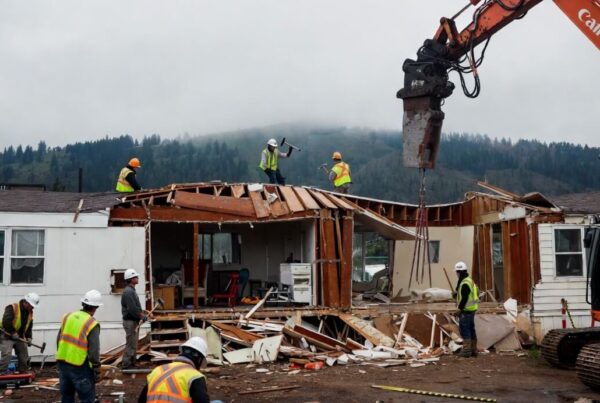
Crews usually take down one section at a time in order to ensure stability and to control debris flow. Heavy equipment (excavators and loaders) as well as manual labor are utilized together.
Control of debris and dust
Nets for debris, water suppression, and staged elimination stop dust from accumulating and keep materials from spreading.
Learn about the features, benefits, and more about triple wide mobile homes here!
On-site Sorting, Recycling, and Disposal
A large aspect of modern demolition is separating materials after they’ve been taken away. Metal appliances, as well as certain plastics, are separated to recycle treated wood, and other materials that are contaminated are treated according to local laws. Sorting properly reduces the amount of waste in landfills and may result in salvage credits that can be used to offset costs.
Typical Material Handling
| Material type | Typical handling |
| Metal (frames, siding, ductwork) | Recycled or sold as scrap |
| Appliances & HVAC | Refrigerants recovered, components recycled |
| Wood & drywall | Sorted; some reused, much goes to disposal |
| Hazardous materials | Abated and disposed of by licensed facilities |
Site Restoration and Final Inspections
After eliminating the debris, crews then level and compact the area to seal any holes left by clearing off, level off areas that might contain obstructions, and then clean up any remaining debris. To ensure that hazardous materials were properly managed and that areas were safe, permit requirements often demand that completed process inspections be conducted at its end; receipts or manifests are usually used as a record to document such processes!
The Bottom Line
So, what happens during a triple wide mobile home demolition? It’s a staged first, safety-focused process that includes permits and planning, risk testing, salvaging, controlled dismantling of sections, carefully sorting and recycling, and the site is restored and documented. The size of a triple-wide simply requires more planning and coordination in comparison to smaller ones; however, the primary goals remain the same, that is, safety, compliance, in addition to responsible use of the materials. If you want clear local guidance or permit help, you can learn more at Washington Free Mobile Home Removal!