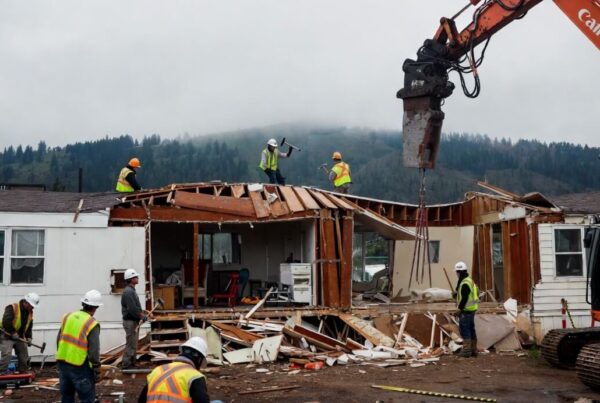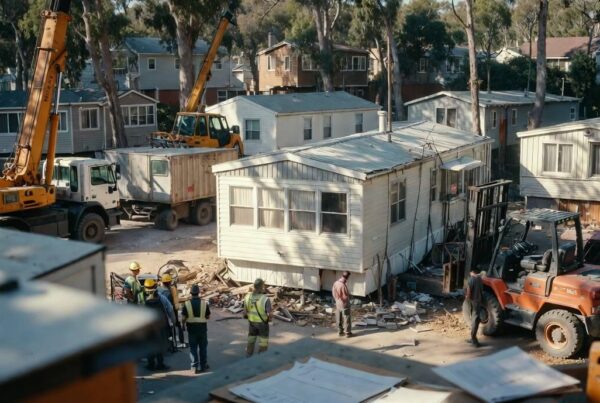
Deconstructing a mobile home is not simply swinging a sledgehammer. It is a series of precautions, legal reviews, and practical judgments that safeguard you, your neighbors, and the environment. The following is the Complete Mobile Home Demolition Checklist to assist you in planning and executing a demolition process completely!
Pre-demolition Planning
1. Documentation & Ownership
- Confirm proof of ownership
- Title
- Deed
- Lien release
- Check local zoning and demolition permit requirements.
- Gather utility account info
- Electric
- Gas
- Water
2. Permits & notifications
- Apply for demolition permits with your county/city.
- Notify utility companies and schedule official disconnects.
- Inform neighbors if the work will be noisy or disruptive.
Check out the features and benefits of triple wide mobile homes here!
Safety & Inspections
3. Hazardous Materials Survey
- Test lead paint and asbestos in old houses.
- In case the hazardous materials are identified, contract certified abatement contractors.
4. Structural and Site Inspection.
- Have an expert walk the premises and record weak floors, piers that are not sturdy, or sinkholes.
- Mark underground utilities, sewer systems, and buried tanks.
Read more: Does manufactured home depreciate?
Salvage & Preparation
5. Salvage What’s Valuable
- Eliminate reusable and recyclable appliances, doors, cabinetry, and fixtures.
- Determine the scrap value of metals.
6. Secure The Site
- Install relevant perimeter fencing and signs.
- Create access corridors in which heavy equipment and trucks can be easily accessed.
Demolition Process
7. Disconnect and Decommission.
- Confirm utilities are disconnected officially.
- Empty and clean up all the fuels, oils, and chemicals.
8. Controlled Teardown
- Dismantle non-structural items first
- interior finishes
- insulation
- Remove sections in a controlled sequence, avoiding letting the structure collapse unpredictably.
- Use dust suppression and debris containment where needed.
9. On-site Sorting
- Divide metals, wood, glass, and hazardous waste during the process of demolition.
- Put the materials in marked dumpsters or roll-offs to be recycled or discarded.
Post-demolition and Site Restoration
10. Proper Disposal & Recycling
- Transport risky waste to the authorized sites.
- Recycling metal and appliances, and other acceptable materials can be used to offset the costs.
11. Documentation and Site Grading
- Surface and level the ground, clearing away impediments and sealing up cracks.
- Get and retain hazardous and recyclable waste manifests, which are useful in permits and resale.
12. Final Inspections
- Schedule final municipal inspections if required.
- Verify utility reconnections or permanent removals as applicable.
Quick Checklist Table
| Phase | Key Actions |
| Planning | Ownership, permits, utility notifications |
| Safety | Hazard testing, structural inspection |
| Prep | Salvage, fencing, access |
| Demolition | Disconnect, controlled teardown, sort debris |
| Post-job | Recycling, grading, documentation, and final inspections |
The Bottom Line
The Complete Mobile Home Demolition Checklist: deals with the necessities of permits and hazardous testing to salvage, controlled demolition, and cleanup. Every action is a component of a system: omitting any may cost you time, money, or safety. To find local advice in Washington, see your county regulations and other reputable sources, such as Washington Free Mobile Home Removal, to get general information!