When it comes time for a mobile home owner to dispose of a trailer, most people don’t have the luxury of working on their own time, at their own pace. Is your mobile home movable? Understanding this can help you decide what is feasible for you and your family. This will largely depend on the state of the house, the rules and regulations of your area, and what you want to do with the ground once the construction is demolished.
What Does “Moveable” Really Mean?
A moveable home is not just one that can be moved. It has to be structurally and logistically feasible.
Structural Integrity
The frame, axles, hitch, and flooring still need to be solid enough for transportation. Damage, rot, or missing components can cause moving to be unsafe and/or impossible.
Transportation Readiness
A dwelling must also comply with the transport requirements of the locality, such as;
- Proper width and height limits
- Secure roof and siding
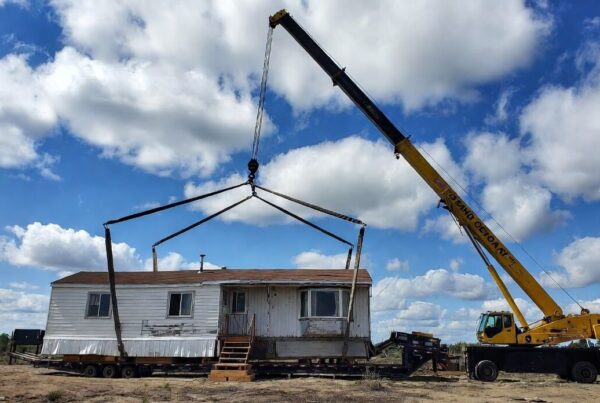
- Lifting or towing an enhanced structure
If moving the house would put it in an unsafe condition, demolition may actually be the safer option.
Also, learn about the features, benefits, and more about triple wide mobile homes here!
Mobile Home Demolition in Washington State
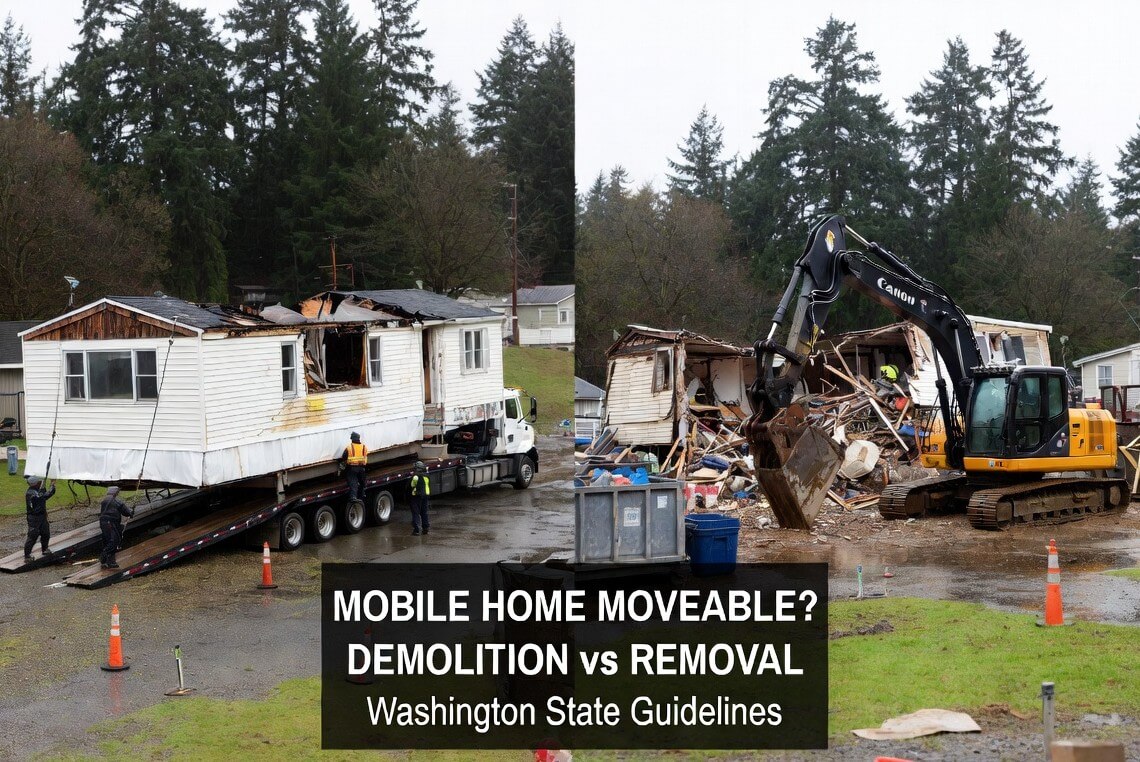
Removal generally means that the mobile home is left in place but moved to another site.
When Removal Makes Sense
Removal may be appropriate if:
- The home is structurally sound
- Transportation access is available
- Local permits allow relocation
- The house itself still has functionality
In Washington, for instance, regulations typically require a permit to move such oversized structures on public roadways and coordination to ensure safe passage. Removal maintains structure and potentially may minimize waste, so it is preferred when possible.
Read more: Does manufactured home depreciate?
Mobile Home Removal in the State of Washington
The debris is removed from the property when tearing down and disposing of a mobile home.
When Demolition Is Necessary
Demolition may be required if:
- The home is significantly damaged or unsafe
- It would cost more to transport than it’s worth
- Structural issues prevent safe relocation
- Hazardous materials complicate movement
Environmental regulations in Washington require demolition debris to be sorted, recycled, and disposed of safely. Before work begins, you might also be obliged to submit to inspections and receive permits.
If you’re wondering, “how much does moving a mobile home cost?” the price can vary significantly. Read more!
Factors to Consider When Making Your Decision
The decision to demolish or remove usually comes down to a few pragmatic factors.
Condition of the Mobile Home
One building was solidly built so that it could be relocated, while a deteriorated one may not.
Cost and Logistics
After all, the specifics of transportation, permits, and route planning could in some cases prove more complicated than demolition.
Future Plans for the Property
If the objective is to clear land more rapidly for redevelopment, it might be quicker simply to tear it down.
Environmental Responsibility
When relocation is an option, reusing old homes has the most positive environmental results, but a responsible reuse of demolition with recycling can minimize some harm to the environment.
Read more: How to remove popcorn ceiling in double wide mobile home?
Why Understanding the Difference Matters
Understanding the difference between removal and demolition means you can avoid potential holds, unplanned costs, or comp claims as a property owner. Local rules in Washington differ by county and city, so getting the lay of the land early helps ease the path for a project. Washington Free Mobile Home Removal specializes in this task.
Final Thoughts
If you were wondering, is your mobile home movable? Demolition vs. removal in Washington State, the difference all comes down to structure, safety, logistics, and regulations. Whereas removal is good when the house can be saved, in cases where there is no time to move, there is the option of demolition.
You may conclude after a visit to the house and after having checked the conditions of the house and taking an insight into the demands of Washington, that you have made an informed decision which meets your property needs and the needs of the environment.