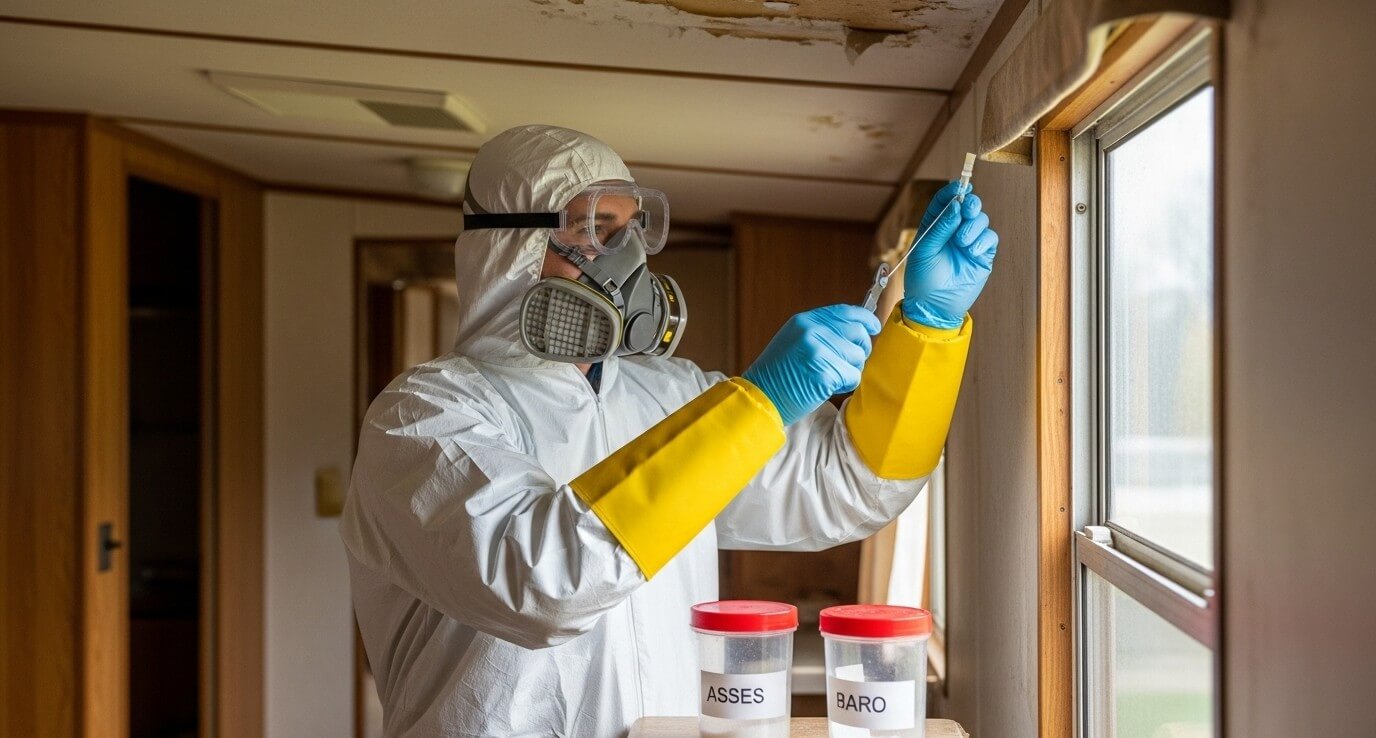
If you own or are in the process of purchasing an older mobile home, one important question frequently asked is: Do old mobile homes have asbestos? The short answer is: sometimes, yes. Knowing where asbestos could be, why testing is important, and what the Washington requirements are can help you make the right decision for you and your family.
This guide breaks everything down in an easy, actionable way without unnecessary technical terminology.
Why Asbestos Was Common in Older Mobile Homes
For many years, asbestos was used in building materials for its cost-effectiveness, fire resistance, and strength. Mobile homes constructed prior to the mid-80s had a particularly high incidence of asbestos materials.
You may find asbestos in:
- Backing of floor tiles and vinyl flooring
- Ceiling panels and textured coatings
- Wall insulation and siding
- Roofing materials and adhesives
Asbestos use was legal and presumed to be safe at the time; health risks were not fully understood.
Learn about the features, benefits, and more about triple wide mobile homes here!
Are All Old Mobile Homes a Health Risk?
Not necessarily. The material itself is dangerous if it is broken or disturbed. Asbestos fibers are less likely to get into the air if materials containing asbestos are left undisturbed and in good condition.
However, risks increase when:
- Evidence of degradation, cracking, or breakage occurs in materials
- Rehabilitation, demolition, or removal is proposed.
- Surfaces have succumbed to fire, water damage, or age
Because mobile homes are of lightweight construction, any agitated particles can release fibers, so testing is an important step.
Read more: Does manufactured home depreciate?
Asbestos Testing Rules in Washington
Washington has stringent regulations for the handling of asbestos in order to protect public health. Testing is a common requirement before an older mobile home can be demolished or hauled off.
Key points to know:
- Buildings constructed before 2004 may be subject to an asbestos survey
- Assessment should be completed by an asbestos professional
- Analyses of samples have to be carried out in accredited laboratories
- Abatement of asbestos is necessary before removal
Failure to test can lead to health issues, legal consequences, and the delay of projects.
If you’re wondering, “How much does moving a mobile home cost?” the price can vary significantly. Read more!
What Happens If Asbestos Is Found?
When tested, if asbestos is confirmed, then removal must be done according to regulation. That doesn’t-automatically-make the project out-of-control, with the right process in place.
Typical steps include:
- Sealing off affected areas
- Controlled removal by licensed professionals
- Safe packing and transportation of substances
- Clearance testing after removal
Read more: How to remove popcorn ceiling in double wide mobile home?
Why Testing Matters Before Mobile Home Removal
Testing is not only a matter of compliance; it’s a matter of safety. As exposure to asbestos is proven to lead to serious long-term health problems, the regulations were introduced in the first place.
Testing ensures:
- Protection for workers and occupants
- Environmental safety during disposal
- Compliance with applicable state and local laws
- Peace of mind before moving forward
Having a sense of what you’re dealing with takes the fear out of it.
Final Thoughts
So, do old mobile homes have asbestos? Some do, and some don’t, but it’s not worth the gamble. The only reliable way to know is through proper testing; in Washington, it’s often before demolition or removal. Washington Free Mobile Home Removal’s emphasis is on informative resources, so that homeowners can take steps to relocate safely and responsibly. Knowledge of asbestos testing regulations today can avoid serious troubles tomorrow.