Do Triple Wide Mobile Homes Qualify for Donation? It’s one of the questions that homeowners wonder about as they consider disposing of a huge mobile home without the trouble of selling or demolishing. Donating provides tax relief, environmental rewards, and a less complicated option than expensive removal. This guide deconstructs the qualifications, process, and best practices to guide you in this option with authority.
Are Triple Wide Mobile Homes Donatable?
Yes, triple-wide mobile homes, sprawling structures often exceeding 2,000 square feet, can be donated to many charities and specialized services. Organizations explicitly accept mobile homes of all sizes, including triple-wides. Services like Washington Free Mobile Home Removal have tailored protocols for handling the logistics of large mobile homes, ensuring they meet donation requirements. The key is meeting specific criteria, which we’ll explore next.
What Makes a Mobile Home Qualify?
Not all triple-wides are donation-qualified. The following is what’s relevant:
- Ownership and Title Clearance:
You need to own the home legally, free of any liens or mortgages. Clear title documents are a must. - Condition, Build Year & Local Codes:
Post-1980 homes are often in demand because of newer construction standards. Charities evaluate structural soundness and conformity with local codes. Access for removal equipment is also taken into account. - IRS Compliance for Tax Deduction:
For donations worth more than $5,000, a qualified appraisal and IRS Form 8283 are necessary for tax deductions.
Being in compliance with these standards makes your triple-wide donation eligible.
How the Donation Process Generally Works
Donating a triple-wide mobile home is a systematic process:
- First Inquiry and Eligibility Check:
Approach the charity with details of your house, including its age, condition, accessibility, and location. Experts will determine whether the triple-wide is donation-worthy. - Charity Coordinating and Logistics:
Sometimes, there is no cost involved, as qualified organizations can manage removal, damage from utility disconnections, transportation, or even demolition when required. They also organize hefty equipment and grants. - Paperwork & Documentation:
Charities give receipts with no mistakes to submit to your IRS and have any appraisal requirements. When the donation process is over, you will be issued documentation.
This streamlined process makes mobile home donation straightforward with the right partner.
Read more: Does manufactured home depreciate?
Tax Benefits of Donating a Triple-Wide Mobile Home
Donating your triple-wide can yield significant financial perks:
- Full Appraised Value Deduction:
This appraised home value can be deducted as a gift to a charity, which can save you thousands of dollars in taxes. However, an expert appraisal is required for expensive houses. - Hassle-Free, Cost-Effective:
Donating saves repair, selling, or destruction expenses. Closing and title transfer fees are often paid by charities, saving you money.
The advantages make triple-wide mobile home donation a worthwhile consideration.
Read more: How much does moving a mobile home cost?
Common Challenges You May Encounter During the Donation Process
1. Limited Charity Availability
Not all charity shops, or other nonprofit organizations, have the equipment and space to handle a large structure like a triple-wide. Some organizations can only take single-wide or double-wide homes because of travel constraints. That can narrow your choices, especially in more rural areas.
2. Accessibility Issues
If you have a narrow lot or sloped property and/or limited access to your neighborhood, movers may lack the tools and experience they need to safely remove the structure. Charities usually do a site visit to verify that they will be able to bring trucks, escort vehicles, and any needed equipment into the home.
3. Cost of Pre-Donation Repairs
While donation is typically cost-free for the owner, some charities set minimum condition standards for the home. That might mean plugging holes in the roof, securing flooring, dealing with electrical hazards, and making sure there’s nothing structurally unsound about a home before it gets torn down.
4. Timing and Scheduling Delays
Charities are typically understaffed or need specific contractors for removals. This may result in scheduling delays, especially in high season. If you have to clear out the home by a short deadline, say as part of a land sale, redevelopment, or eviction timelines, the availability of charity might not always work with your schedule.
5. Restrictions Based on Local Regulations
Some areas have a fairly rigorous process for moving older mobile homes, particularly those constructed before HUD was established (pre-1976). And even if a charity will accept the unit, local codes may limit transporting it to another property, affecting eligibility.
6. Appraisal and IRS Documentation Requirements
The IRS insists that homes worth more than $5,000 have a professional appraisal, which the donor normally pays for himself or herself. Although the deduction is typically worth it, homeowners should plan on this extra step and cost.
Read more: How to remove popcorn ceiling in double wide mobile home?
Is Donating a Triple Wide Mobile Home Always the Best Option?
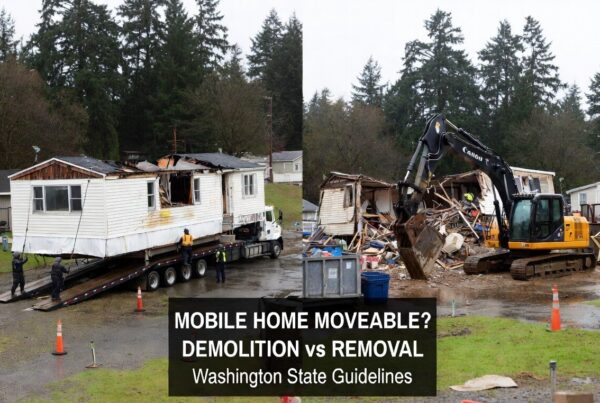
Donation is, of course, a great option, but it’s not always the most feasible for all homeowners. If the home needs major repairs, does not pass structural inspections, or stands in a difficult-access area, some charities might refuse it because removal expenses are too costly. In these instances, selling for salvage or professional demolition is often more practical and affordable. Homeowners will need to weigh the possible tax deduction against estimated home-repair costs and logistics challenges, such as getting the tree transported from one place to another and dealing with timing issues. By doing a little homework on these factors ahead of time, you can help decide what option provides the most financial and logistical sense for you.
Alternatives & Comparisons
Donation is not the only choice. Check out the following alternatives:
- Selling or Deconstruction:
If your dwelling is in decent shape, resale or dismantling for usable materials (such as metal or wood) may provide a better return. - Donation to Fire Departments or Individuals:
Certain fire departments take on old mobile homes for practice exercises, or individuals can salvage components, but logistics and codes still apply.
Balance these against donation according to your home’s condition and objectives.
The Bottom Line
Do Triple Wide Mobile Homes Qualify for Donation? Yes, as long as you have clean ownership, the home is in condition and code acceptable for donation, and you deal with a competent charity. Donating entitles tax deductions, skips demolition or selling woes, and has a beneficial environmental or social effect. Check out the ability of the organization, get paperwork in order, and research your alternatives with attention to detail. To ensure expert advice, call Washington Free Mobile Home Removal and make your donation experience trouble-free and rewarding!