
If you own land with an unwanted mobile home, you may wonder, “How Does Free Mobile Home Removal Work for Landowners?” It’s good to know that free removal services can assist. This blog will explain how this procedure is carried out and why it’s an ideal alternative for homeowners in Washington.
The Basic Idea: Salvage Pays the Bill
At the heart of many “free” removals is a simple economic play: demolition contractors recover value from materials (metal siding, aluminum, appliances, ductwork, copper wiring, etc.). When that salvage value covers labor, hauling, and disposal, the contractor can offer removal at no charge to the landowner. It’s not charity; it’s a business model that turns waste into working capital.
Who is Eligible and What Affects the Offer?
Condition and Accessibility Matter
Landowners get the best chance of a free removal when the unit:
- Is structurally intact enough to allow efficient salvage.
- Has recoverable materials in reasonable condition (metal siding, appliances, etc.).
- It is located on a lot that has easy access for trucks and heavy equipment.
If the mobile home is polluted (asbestos and massive mold) or is buried beneath other structures, the need for abatement and additional handling costs typically will not be possible for free removal.
Local Rules and Permits
The permit requirements vary depending on the county. Certain counties require demolition permits and utility disconnect receipts, or hazardous materials surveys. Contractors incorporate permit times and fees into their proposals; occasionally, they handle permits for you, but sometimes not. Be sure to confirm who is accountable for permits before any agreement.
Read more: Does manufactured home depreciate?
Typical Step-by-step Process
- Initial inquiry and photos:
Landowner submits photos and property details. - Site visit and estimate:
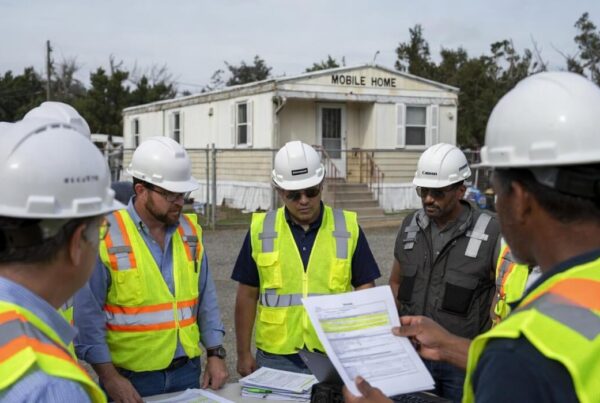
Contractor inspects the unit, checks access, and confirms salvage potential. - Written agreement:
A simple contract outlines responsibilities (utility disconnects, hazardous materials, timeline). - Permits and testing:
If needed, testing for asbestos or lead is completed prior to work. - Salvage and demolition:
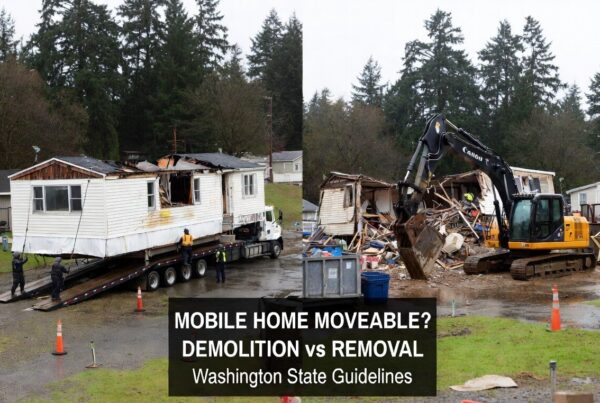
Reusable items are removed first, then controlled demolition and on-site sorting occur. - Cleanup and manifests:
The lot is cleared, and disposal/recycling receipts are provided on request.
| Task | Usually contractor | Usually landowner |
| Initial inspection | Yes | (provide access/photos) |
| Permits | Sometimes (confirm) | Sometimes (if required) |
| Utility disconnects | Sometimes handled | Often required before work |
| Hazardous abatement | Contractor if included | Maybe an extra cost to the landowner |
| Final cleanup & receipts | Yes | (confirm during agreement) |
Learn about the features, benefits, and more about triple wide mobile homes here!
Red Flags and Questions to Ask
Before signing, you should ask:
- Does the offer really “free,” or are additional charges possible (abatement permits or long-haul costs)?
- Does the contractor have the contractor with a written statement of the recycling and disposal?
- Who is accountable if dangerous materials are discovered at the site?
- How will salvage credits be managed (applied to the cost of the job, or transferred by the owner of the land)?
Practical Suggestions to Improve Your Chances
- Clean up personal items and household waste before the crew’s arrival.
- Take accurate measurements and photos in the estimation stage.
- Verify access routes and eliminate obstructions (vehicles and fences) that may slow down the workers.
The Bottom Line
How Does Free Mobile Home Removal Work for Landowners? Landowners who want to remove their mobile homes are in luck. This option can save money, benefit the environment, and open up space for new possibilities. If your home has an old mobile, contact Washington Free Mobile Home Removal today. Let us help you reclaim your land!